

By the time most people reach retirement, something subtle but important has changed in the way they think about investing.
Growth, which once felt necessary, starts to feel optional. Risk, which was once tolerated, becomes something to avoid.
And so the instinct is to simplify: reduce exposure, hold more cash, move into safer assets.
It feels sensible. It feels responsible.
But it can create a different problem altogether.
For decades, the industry has reinforced the idea that risk should fall as you get older.
Many pension strategies are built around this assumption, automatically shifting portfolios away from equities and into bonds or cash over time.
It is neat. It is scalable. And it is often wrong.
The reality is that retirement today does not follow a single path.
People stop work gradually. They draw income flexibly. And crucially, their money often needs to last far longer than the systems managing it were originally designed for.
In that context, reducing growth exposure simply because of age starts to look less like prudence and more like a blunt rule applied without context.
The real issue is that age has become a shortcut for something much more complex.
It is being used to stand in for time horizon, spending needs and capacity for loss.
But those things are not determined by a birthday.
Two individuals of the same age can be in completely different positions.
One may need access to their capital in the next few years. Another may not touch a significant portion of their wealth for decades.
Treating them the same because of age alone is not cautious. It is imprecise.
This matters because retirement is not the end of investing.
In many ways, it is the most demanding phase of it.
There is no longer a salary to fall back on. Inflation continues to erode purchasing power. And decisions made early in retirement can have long-lasting consequences.
In this environment, growth is not a luxury. It is part of the solution.
Yet many investors are guided toward reducing it.
Not because their circumstances require it, but because the system has normalised the idea that getting older means stepping back from markets.
The flaw in this thinking became particularly clear in recent years.
Assets that were supposed to provide stability did not behave as expected. Diversification did not always protect in the way investors had been led to believe.
It exposed a deeper issue: the way we define safety.
For many, safety has come to mean reducing short-term fluctuations.
But focusing purely on volatility can ignore a more important risk — the risk of insufficient growth over time.
What matters more than avoiding every market movement is ensuring that your capital can support your lifestyle over the long term.
This is where structure becomes far more important than asset labels.
A portfolio built as a single pool of money behaves very differently from one that is organised with purpose.
If all assets are treated the same, then any withdrawal during a downturn crystallises losses.
But if money is separated based on when it is needed, decisions become more controlled.
Short-term spending can be insulated from market movements.
Long-term investments can be left alone to recover and grow.
The same assets, organised differently, produce very different outcomes.
This is a shift in mindset.
Instead of asking how to reduce risk as you age, the better question is how to align different parts of your wealth with different timeframes.
Doing this does not eliminate market risk.
But it changes how that risk is experienced.
It removes the pressure to react.
It reduces the likelihood of selling at the wrong time.
And it allows long-term capital to do what it is supposed to do: compound.
The uncomfortable truth is that many investors are not made poorer by markets themselves.
They are made poorer by the way they are positioned going into them.
Retirement does not require abandoning growth.
It requires organising it properly.
Because the real danger is not that markets are unpredictable.
It is that we respond to that uncertainty by making long-term decisions based on short-term discomfort.
Benefit from comprehensive, integrated, and objective advice.
Let’s discuss your specific needs and how I can help you meet your objectives
Let’s start the conversation
Online enquiry form
Related posts
 Published On: October 5, 2026|4.9 min read|
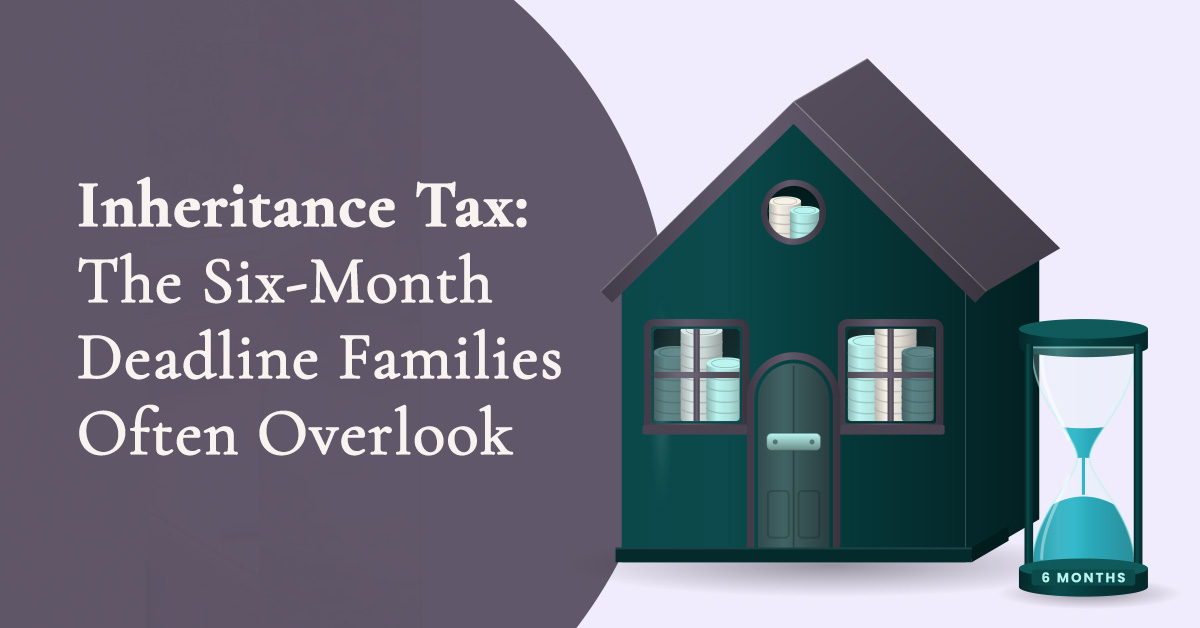
Inheritance Tax: The Six-Month Deadline Families Often Overlook
Inheritance tax is usually due within six months, often before the house can be sold. How executors can pay it when the wealth is tied up in property.
Read more
 Published On: September 28, 2026|7.6 min read|
Your Pensions Don’t Know You Have Other Pensions
Most people collect several pensions over a working life, but none of them know the others exist. Why that's a collection of pots, not a retirement plan.
Read more
 Published On: September 18, 2026|5.4 min read|
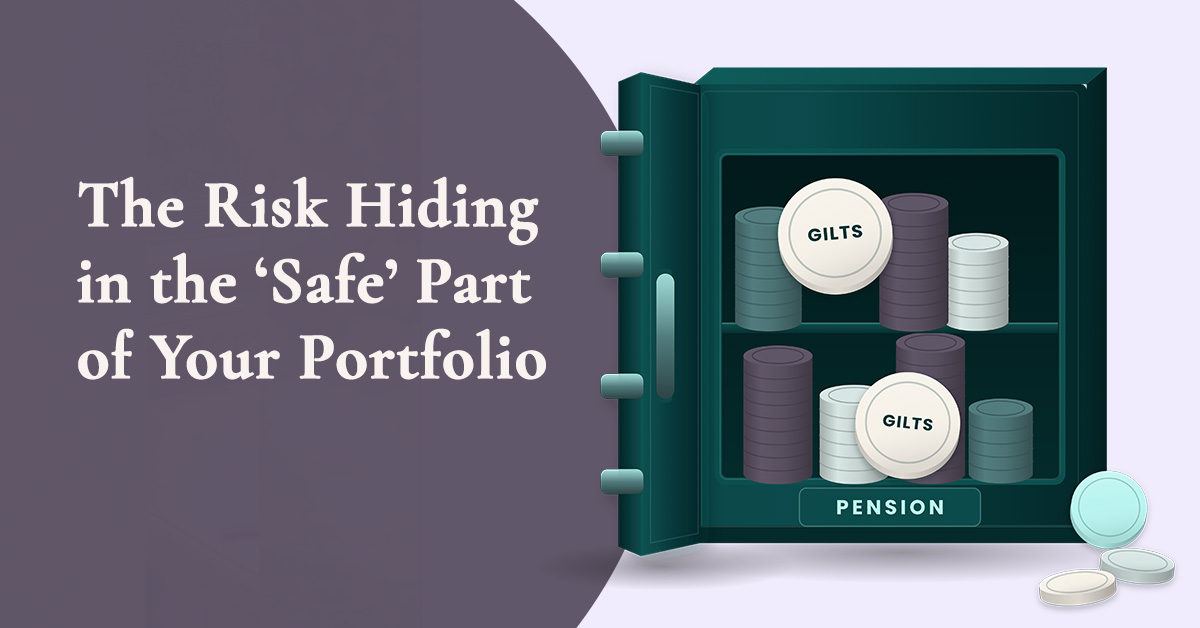
The Risk Hiding in the ‘Safe’ Part of Your Portfolio
Your pension may hold more gilts than you realise. How the bond market prices government borrowing, and why "safe" is not the same as free from risk.
Read more