
One of the most common things I hear from investors approaching retirement is:
“I just want to be cautious now.”
On the surface, that sounds entirely sensible.
After all, if someone has spent decades building wealth, why would they suddenly want to take large risks later in life?
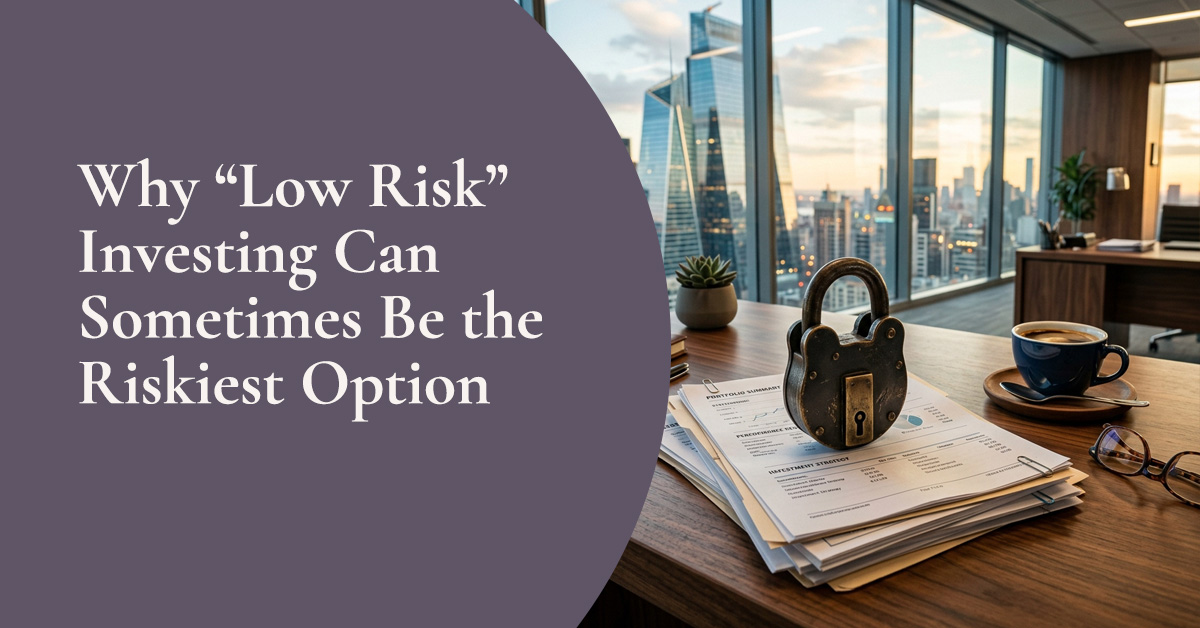
But one of the biggest misconceptions in investing is the idea that “low risk” automatically means “safe”.
In reality, many investors who believe they are reducing risk may actually be increasing a different type of danger altogether.
Because risk in financial planning is not simply about volatility or market falls.
The real risk is failing to achieve the outcome you actually need.
And increasingly, I see people positioning portfolios in ways that feel emotionally comfortable in the short term whilst potentially creating far greater long-term problems.
The Problem With Defining Risk Too Narrowly
Many people define investment risk as:
- Stock market falls
- Seeing portfolio values fluctuate
- Headlines about recessions or crashes
- Short-term losses
Those things certainly matter.
But they are only one form of risk.
There are other risks that can be just as damaging financially:
- Inflation eroding purchasing power
- Running out of money later in retirement
- Holding too much cash for too long
- Failing to achieve sufficient long-term growth
- Concentrating wealth in a handful of assets
- Taking income from portfolios inefficiently
These risks are often less visible because they unfold slowly rather than dramatically.
A market crash feels frightening immediately.
Inflation tends to damage wealth gradually and almost invisibly over many years.
Yet the long-term impact can be enormous.
Cash Often Feels Safer Than It Really Is
Cash gives people certainty.
You can log in and see the number sitting there unchanged. That emotional stability is reassuring, particularly after periods of market volatility.
But cash carries its own risks.
If inflation averages 3% to 4% over a long period, large cash balances can quietly lose significant purchasing power over time.
Someone retiring at 60 may realistically need their money to last 30 years or more. Over that kind of timeframe, portfolios that fail to generate meaningful long-term growth can become surprisingly vulnerable.
This is especially important now because many retirees are healthier, living longer and spending more actively in retirement than previous generations.
The danger is that investors become so focused on avoiding short-term volatility that they unintentionally increase the risk of long-term financial erosion.
“Low Risk” Portfolios Are Not Always Diversified
Another issue is that many supposedly cautious portfolios are not particularly diversified.
I often see investors holding:
- Large cash balances
- Heavy UK home bias
- A small number of familiar shares
- Overexposure to bonds without understanding duration risk
- Multiple funds that ultimately own very similar underlying companies
On paper, this can appear conservative.
In practice, it can leave portfolios vulnerable to inflation, concentration risk and poor long-term real returns.
True diversification is not simply owning lots of funds.
It is understanding what you actually own underneath them.
Timing Matters More Than Many People Realise
One of the most damaging mistakes can occur when people de-risk entirely at the wrong moment.
For example, after a market fall, investors sometimes move heavily into cash because they no longer feel comfortable taking risk.
Emotionally, that decision can feel logical.
Financially, it can permanently lock in losses and reduce the likelihood of participating in eventual recoveries.
Similarly, some retirees purchase annuities during periods when rates or circumstances may not necessarily make them optimal, simply because certainty feels appealing.
That does not mean annuities are inherently wrong. In many situations they can play a valuable role.
But major financial decisions driven primarily by fear rather than planning can create unintended consequences.
The Goal Is Not Maximum Growth
None of this means investors should simply take more risk.
The objective is not aggressive investing for the sake of it.
Good financial planning is about aligning investment strategy with:
- Time horizon
- Capacity for loss
- Required future spending
- Emotional tolerance for volatility
- Long-term objectives
For some people, a more cautious portfolio is entirely appropriate.
The issue arises when “low risk” becomes shorthand for:
“I want to avoid seeing temporary declines at any cost.”
Because avoiding short-term discomfort can sometimes create larger long-term problems.
The Most Dangerous Risk Often Doesn’t Feel Like Risk
One of the interesting realities of investing is that the risks people fear most are often not the ones that ultimately cause the greatest damage.
Sharp market falls feel dramatic.
But historically, markets have tended to recover over time.
The quieter risks are often the more dangerous ones:
- Falling behind inflation
- Excessive conservatism
- Lack of diversification
- Poor planning
- Emotional decision-making
- Failing to adapt strategy over time
Those risks rarely make headlines.
But they can materially alter retirement outcomes over decades.
And for many investors, that is the risk that matters most.
Benefit from comprehensive, integrated, and objective advice.
Let’s discuss your specific needs and how I can help you meet your objectives
Let’s start the conversation
Online enquiry form
Related posts
 Published On: September 18, 2026|5.4 min read|
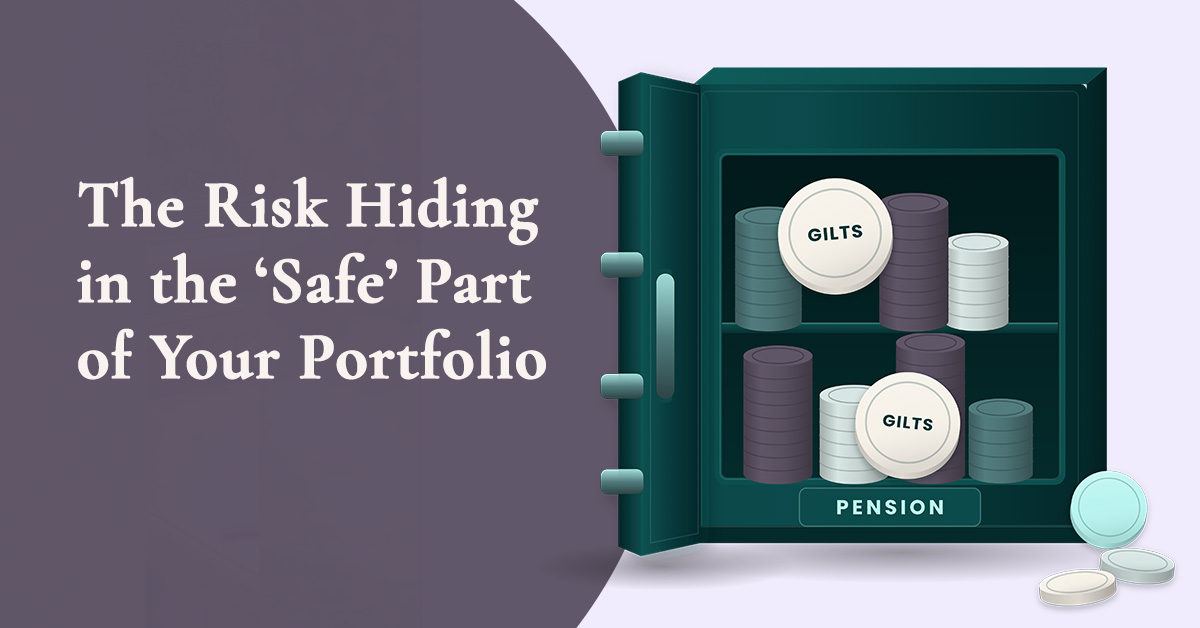
The Risk Hiding in the ‘Safe’ Part of Your Portfolio
Your pension may hold more gilts than you realise. How the bond market prices government borrowing, and why "safe" is not the same as free from risk.
Read more
 Published On: September 11, 2026|7.9 min read|
Six Funds. One Portfolio. More Overlap Than You Think.
This is one of the things you notice when you spend enough time looking through investment portfolios. People often own the same companies far more times than they realise. It doesn't make those companies bad investments. It does mean the number of funds in your portfolio tells you almost nothing about how diversified you really are.
Read more
 Published On: June 24, 2026|6.6 min read|
UK State Pension Abroad: Frozen Pensions, National Insurance Changes and What Expats Need to Know
Recent changes to voluntary National Insurance contributions, frozen pension rules and the hidden risks facing expatriate families.
Read more