
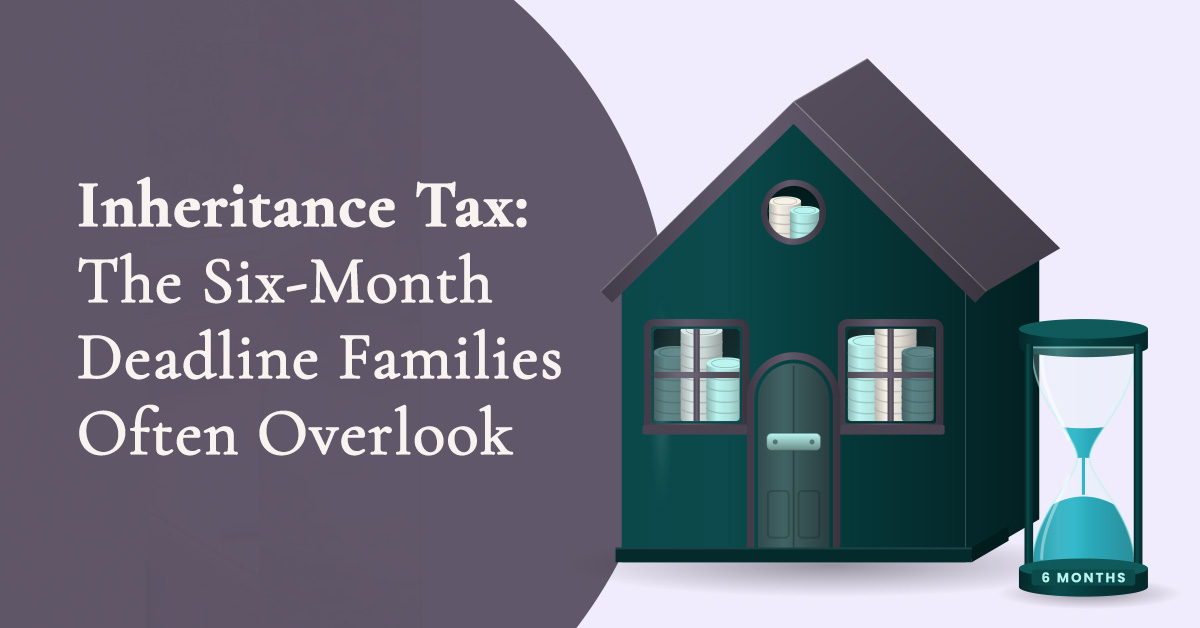
The number everybody knows about inheritance tax is 40 per cent. But two other numbers can matter just as much when somebody dies: six and ten.
Six is the number of months an executor generally has before inheritance tax becomes due, counted from the end of the month in which the person died. Ten is the maximum number of annual instalments over which inheritance tax attributable to certain assets, including qualifying property, can potentially be spread.
The difficulty is that inheritance tax can become payable before executors have access to the very assets they need to pay it.
When the wealth is in the house
This is increasingly relevant because property makes up such a large part of many estates.
The inheritance tax nil-rate band has been £325,000 since April 2009. Property values have risen substantially since then, bringing more estates into the inheritance tax system even where families would not necessarily consider themselves particularly wealthy.
There are additional allowances that may apply. The residence nil-rate band can provide an additional allowance when a qualifying home passes to direct descendants, while unused allowances can potentially be transferred between spouses and civil partners.
But the rules depend on the circumstances of the estate, and the practical issue remains the same: an estate can have considerable value on paper without having the cash available to meet an inheritance tax bill.
From April 2027, most unused pension funds and death benefits are also due to be brought within the scope of inheritance tax, making advance estate planning increasingly important.
The probate cash-flow problem
The difficulty for executors is often one of timing.
A property can usually be marketed and an offer accepted while probate is being dealt with, but the sale cannot normally complete until the grant of probate has been issued.
At the same time, some inheritance tax may need to be paid before the grant is obtained.
This can leave an executor with an estate that is more than capable of paying its tax bill eventually, but without enough accessible cash to pay it when it falls due.
Paying inheritance tax by instalments
Where inheritance tax relates to certain assets, including qualifying land and property, HMRC allows the tax to be paid in ten annual instalments.
That can help with the immediate cash-flow problem, but it does not mean the whole inheritance tax bill can simply be deferred for ten years.
Tax attributable to assets that do not qualify for the instalment option will generally still need to be paid by the normal deadline, together with the first instalment relating to the qualifying property.
Interest can also be charged on outstanding inheritance tax, so spreading payments may increase the overall cost to the estate.
If the property is subsequently sold, the remaining instalments will generally become payable at that point.
Can inheritance tax be paid from the estate before probate?
Sometimes.
HMRC’s Direct Payment Scheme allows participating banks and building societies to release money from the deceased’s accounts directly to HMRC before probate has been granted. Similar arrangements may be available through some investment providers.
This can be extremely useful where an estate has sufficient cash or investments but the executor cannot otherwise access them.
However, not every provider participates, and these arrangements do not necessarily solve the problem where most of the estate’s value is tied up in property.
Executors should therefore establish early on what assets are available, which providers may be able to release money directly to HMRC and how much of the inheritance tax bill will need to be funded from elsewhere.
What if the estate simply cannot pay?
There is a further route, but it is important to understand that this is intended for exceptional circumstances rather than as a normal way of dealing with inheritance tax.
Where inheritance tax needs to be paid before probate but the executors genuinely cannot raise the money — perhaps because most of the estate is tied up in property and reasonable options for funding the liability have been exhausted — HMRC may consider allowing a grant to be issued on credit.
This can allow the executors to obtain the grant, sell the relevant assets and then settle the outstanding inheritance tax from the proceeds.
But this should be regarded as an exceptional backstop, not something an estate can assume will be available. HMRC will consider the particular circumstances, and executors may need to demonstrate why the tax cannot be paid, what attempts have been made to raise the money and how the outstanding liability will ultimately be settled.
Where an estate may need to rely on this route, it makes sense to engage with HMRC as early as possible rather than wait until the payment deadline has arrived.
Why this is worth considering before it becomes a problem
Inheritance tax planning is often discussed in terms of reducing the eventual tax bill. But there is another question that receives much less attention:
Where will the money actually come from to pay it?
An estate can be comfortably solvent and still have a serious liquidity problem.
For families with substantial property wealth, relatively little cash or investments, or more complicated family arrangements, it is worth considering this well before the money is needed.
That might mean reviewing how assets are held, maintaining sufficient liquidity, understanding which allowances are likely to be available and considering how executors would meet an inheritance tax liability without being forced into expensive short-term borrowing or a rushed asset sale.
Estate planning is not simply about how much tax may eventually be due. It is also about making sure the people left behind can deal with it practically.
Tax rules can change and their application depends on individual circumstances. This article is for general information only and does not constitute tax or financial advice.
Benefit from comprehensive, integrated, and objective advice.
Let’s discuss your specific needs and how I can help you meet your objectives
Let’s start the conversation
Online enquiry form
Related posts
 Published On: September 28, 2026|7.6 min read|
Your Pensions Don’t Know You Have Other Pensions
Most people collect several pensions over a working life, but none of them know the others exist. Why that's a collection of pots, not a retirement plan.
Read more
 Published On: September 18, 2026|5.4 min read|
The Risk Hiding in the ‘Safe’ Part of Your Portfolio
Your pension may hold more gilts than you realise. How the bond market prices government borrowing, and why "safe" is not the same as free from risk.
Read more
 Published On: September 11, 2026|7.9 min read|
Six Funds. One Portfolio. More Overlap Than You Think.
This is one of the things you notice when you spend enough time looking through investment portfolios. People often own the same companies far more times than they realise. It doesn't make those companies bad investments. It does mean the number of funds in your portfolio tells you almost nothing about how diversified you really are.
Read more